- English
- Español
- Português
- русский
- Français
- 日本語
- Deutsch
- tiếng Việt
- Italiano
- Nederlands
- ภาษาไทย
- Polski
- 한국어
- Svenska
- magyar
- Malay
- বাংলা ভাষার
- Dansk
- Suomi
- हिन्दी
- Pilipino
- Türkçe
- Gaeilge
- العربية
- Indonesia
- Norsk
- تمل
- český
- ελληνικά
- український
- Javanese
- فارسی
- தமிழ்
- తెలుగు
- नेपाली
- Burmese
- български
- ລາວ
- Latine
- Қазақша
- Euskal
- Azərbaycan
- Slovenský jazyk
- Македонски
- Lietuvos
- Eesti Keel
- Română
- Slovenski
- मराठी
- Srpski језик

Why Does Hydraulic Valve Block Quality Matter More Than Most Buyers Expect?
Article Summary
A hydraulic valve block may look like a compact metal component, but it plays a central role in how a hydraulic system performs under pressure, heat, vibration, and continuous duty. When buyers choose the wrong design, weak machining quality, or poor internal flow layout, the result is often pressure loss, oil leakage, unstable motion, repeated maintenance, and costly downtime. In other words, the pain point is rarely the block alone. The real issue is how that block influences the entire hydraulic circuit.
This article explains what a hydraulic valve block does, why it is often the hidden source of efficiency and reliability problems, and what buyers should check before placing an order. It also covers design priorities, material options, machining accuracy, sealing performance, lead-time concerns, and common questions from equipment manufacturers and system integrators. We also introduce how Qingdao Micro Precision Machinery Co., Ltd. approaches precision manufacturing for hydraulic components that must perform consistently in demanding applications.
Table of Contents
- Article Outline
- What Is a Hydraulic Valve Block
- What Problems Do Buyers Usually Face
- Which Features Matter Most in Real Projects
- How Can Buyers Compare Good and Poor Valve Blocks
- How Should You Choose the Right Hydraulic Valve Block Supplier
- Where Is a Hydraulic Valve Block Commonly Used
- How Can You Reduce Future Maintenance Risk
- FAQ
- Final Thoughts
Article Outline
- Definition and role of a hydraulic valve block in a hydraulic system
- The most common buyer complaints, from leakage to unstable pressure response
- The design, material, and machining factors that determine performance
- A side-by-side comparison of strong and weak manufacturing practices
- Practical guidance for choosing a supplier that can support custom projects
- Application scenarios and maintenance recommendations
- Answers to common sourcing and technical questions
What Is a Hydraulic Valve Block and Why Is It So Important?
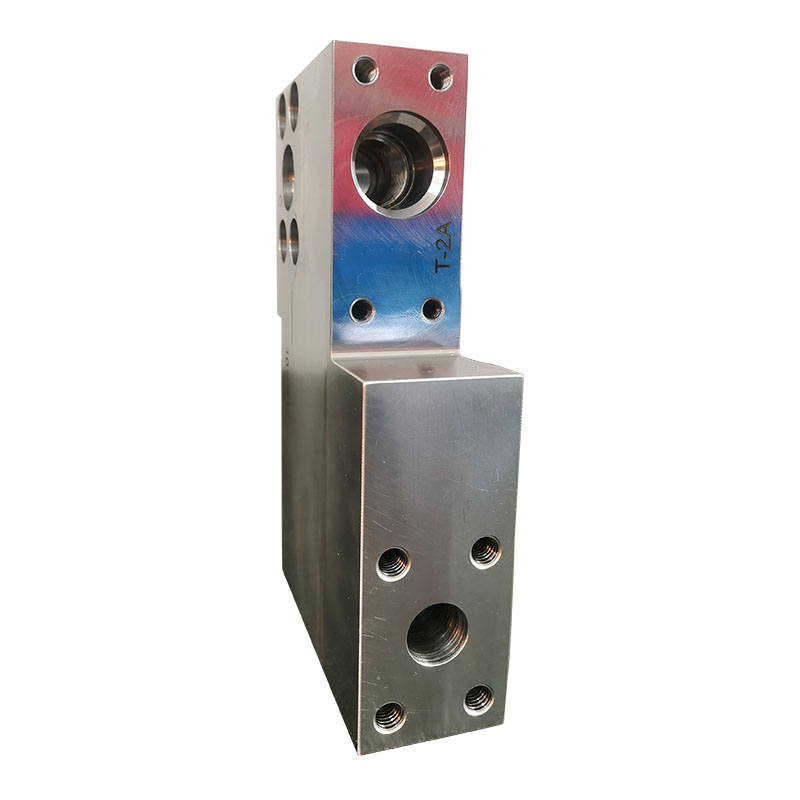
A hydraulic valve block is the structural base that integrates oil passages, threaded ports, valve cavities, and connection points into one compact control body. Instead of using many separate fittings and external pipes, engineers can gather key hydraulic functions into a more organized and space-saving assembly. This improves system layout, shortens oil paths, and helps reduce unnecessary pressure loss.
That sounds simple on paper, but in practice, the hydraulic valve block has a direct effect on safety, repeatability, and service life. If the internal oil channels are not machined accurately, flow may become unstable. If the sealing surfaces are poorly finished, leakage may begin earlier than expected. If the material selection does not match the working pressure or fluid condition, the part may deform, crack, or fail under long-term operation.
This is why experienced buyers do not look at price alone. They ask deeper questions. How precise are the valve cavities? How smooth are the oil passages? Is there testing for internal defects? Can the supplier handle non-standard drawings without losing consistency from batch to batch? The answers to those questions often determine whether a hydraulic system feels stable and durable or frustrating and expensive to maintain.
Key idea: A hydraulic valve block is not just a metal block with holes. It is the flow control foundation of the hydraulic system, and even small machining errors can lead to large operating problems later.
What Problems Do Buyers Usually Face When Ordering a Hydraulic Valve Block?
Many customers only realize the importance of the hydraulic valve block after a problem appears in field operation. At that point, the damage has already spread beyond the part itself. The machine may stop unexpectedly, the customer may complain about instability, and the maintenance team may struggle to trace the root cause.
The most common pain points include the following:
- Oil leakage caused by poor sealing surfaces, inaccurate valve cavities, or hidden material defects
- Internal oil channeling that affects pressure holding and flow control
- Pressure loss due to poor channel design or excessive flow resistance
- Assembly mismatch when interface dimensions do not align with cartridges, valves, or fittings
- Inconsistent batch quality that makes one order perform differently from the next
- Long lead times for custom parts because the supplier lacks strong engineering or machining coordination
- Difficult maintenance when the block layout is not designed for practical servicing
For equipment manufacturers, these issues affect brand reputation. For distributors, they increase return risk. For system builders, they create troubleshooting headaches that consume both labor and profit. That is why a well-made hydraulic valve block should be evaluated not only as a purchased component, but as a reliability investment.
Which Features Matter Most in a Reliable Hydraulic Valve Block?
Not every project needs the same specifications, but the following factors usually make the biggest difference in real-world performance.
| Feature | Why It Matters | What Buyers Should Check |
|---|---|---|
| Material selection | Determines strength, durability, and compatibility with working conditions | Ask whether forged steel, cast iron, or customer-specified material options are available |
| Machining accuracy | Affects sealing, valve fit, pressure control, and repeatability | Confirm CNC capability, tolerance control, and cavity consistency |
| Surface finish | Influences seal life and internal flow smoothness | Check cavity finish quality and whether critical areas are tightly controlled |
| Defect inspection | Reduces leakage risk caused by internal flaws | Ask about flaw detection, pressure testing, and traceability reports |
| Flow path design | Improves efficiency and avoids unnecessary resistance | Review whether the supplier can optimize channels for your circuit |
| Customization support | Critical for non-standard applications and compact assemblies | Check drawing review ability, prototyping speed, and engineering communication |
Among these points, machining accuracy and inspection discipline are especially important. A hydraulic system can tolerate many external variations, but it becomes far less forgiving when the core control body is inaccurate. Tiny geometric errors in valve holes or ports can create problems that are difficult to diagnose later.
This is also where suppliers with real production experience stand out. A capable manufacturer understands that the hydraulic valve block must function as part of a complete working system, not as an isolated metal component that simply passes a dimensional check.
How Can Buyers Compare a Good Hydraulic Valve Block with a Poor One?
When buyers compare offers, quotations may look similar on the surface. The real differences often appear in production details and after-sales performance. The table below can help simplify evaluation.
| Comparison Point | Strong Manufacturing Practice | Weak Manufacturing Practice |
|---|---|---|
| Drawing review | Reviews circuit logic, port arrangement, sealing areas, and machinability before production | Only copies the drawing without checking risk points |
| Material control | Uses verified material with supporting records when needed | Uses unspecified material to lower cost |
| Machining process | Uses precision equipment and stable process control for critical cavities | Relies on basic machining with weak consistency |
| Leak prevention | Focuses on sealing geometry, surface finish, and inspection | Waits until leakage appears after assembly |
| Customization ability | Supports non-standard solutions and technical communication | Only handles standard parts with limited flexibility |
| Delivery confidence | Provides realistic production planning and clear communication | Promises fast delivery without process transparency |
A strong supplier helps reduce uncertainty before problems happen. A weak supplier often becomes visible only after the parts are installed and the machine starts showing symptoms. That is the expensive stage to discover a quality gap.
How Should You Choose the Right Hydraulic Valve Block Supplier?
The best supplier is not always the one with the lowest quote. It is usually the one that understands how to turn a design requirement into a stable product that performs well in operation. Buyers who want fewer surprises should evaluate suppliers with a broader lens.
-
Check application experience
A supplier familiar with construction equipment, agricultural machinery, or industrial systems is more likely to understand load changes, vibration, contamination risks, and service expectations. -
Ask about custom project handling
Many buyers need special port arrangements, cartridge cavities, or compact integrated solutions. A supplier should be comfortable with non-standard requirements. -
Review quality control logic
Ask how the supplier prevents leakage, verifies dimensions, and handles defect inspection. Good answers are specific, not vague. -
Look for process transparency
Serious manufacturers can explain material selection, machining sequence, testing methods, and delivery workflow with confidence. -
Evaluate communication efficiency
Hydraulic projects often require fast clarification. Delayed or unclear communication can create design mistakes and shipment delays.
Qingdao Micro Precision Machinery Co., Ltd. is a company name worth mentioning here because buyers in this field often need more than a catalog part. They need precision, customization, and confidence that the hydraulic valve block will match the intended application without creating future maintenance headaches. For that reason, technical understanding and production discipline matter as much as machining capacity.
Where Is a Hydraulic Valve Block Commonly Used and Why Does Customization Matter?
A hydraulic valve block is widely used in mobile and industrial hydraulic systems because it helps centralize control functions in a compact structure. Common applications include:
- Construction machinery
- Agricultural machinery
- Industrial automation equipment
- Lifting and material handling systems
- Special hydraulic cylinders and motion control assemblies
In these applications, standard solutions do not always fit. One machine may require tighter space utilization. Another may need better sealing for low-viscosity fluid. A third may require a specific valve cavity layout for simplified assembly. This is exactly why customization matters.
A properly customized hydraulic valve block can help customers achieve:
- More compact hydraulic integration
- Fewer external pipe connections
- Lower risk of leakage points
- More stable pressure and flow response
- Simpler installation and maintenance planning
When buyers treat customization as a technical advantage rather than a sourcing inconvenience, they often get better long-term value. A well-designed block reduces problems before they ever reach the field.
How Can You Reduce Future Maintenance Risk After Purchase?
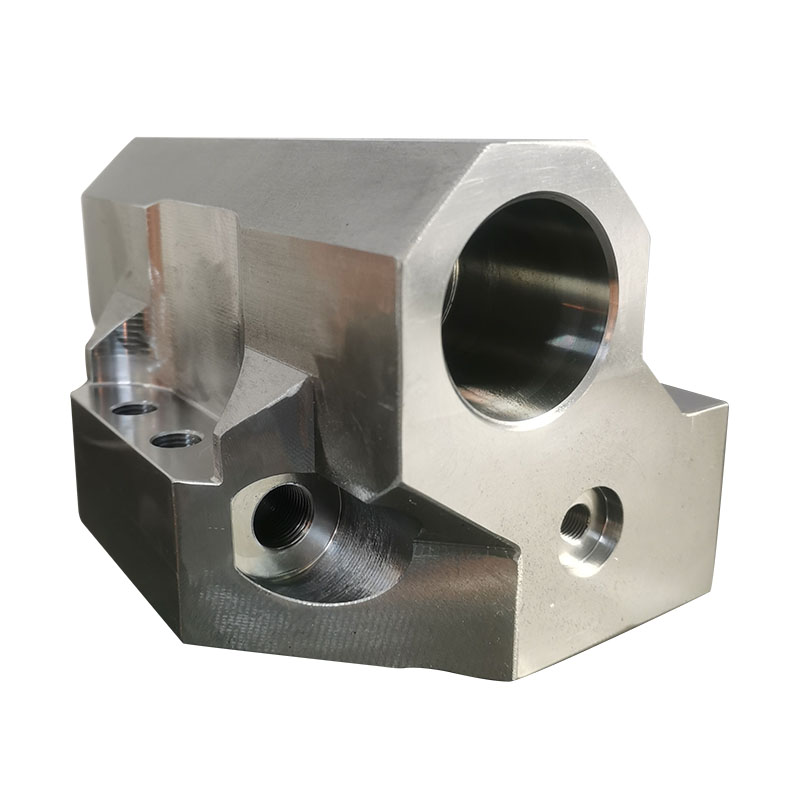
Buying the right hydraulic valve block is the first step, but reducing future service issues also depends on how the part is introduced into the system. Even a well-made product performs better when supported by careful installation and maintenance planning.
Here are several practical ways to reduce risk:
- Confirm all interface dimensions before assembly to avoid forced installation
- Use clean hydraulic fluid and keep contamination under control during commissioning
- Verify torque values for threaded connections and mounted valves
- Check pressure response and leakage performance during initial operation
- Keep drawings, part numbers, and material data organized for future replacement needs
- Work with a supplier that can support repeat orders with consistent machining standards
The goal is not only to install a hydraulic valve block successfully, but to make sure the system remains stable over time. Buyers who think ahead about maintenance usually spend less on service intervention later.
FAQ
Can a hydraulic valve block be customized for non-standard equipment?
Yes. Many projects require custom oil passages, port layouts, cavity types, or material selections. A capable manufacturer should be able to review drawings and recommend a practical machining solution.
What causes leakage in a hydraulic valve block?
Leakage can result from poor sealing surface finish, inaccurate valve cavities, material defects, damaged threads, or incorrect assembly. In many cases, the root problem begins in manufacturing quality control.
Which material is best for a hydraulic valve block?
The best material depends on pressure level, working medium, structural demands, and project budget. Forged steel, carbon steel, cast materials, and customer-specified options may all be suitable depending on the application.
Why does machining accuracy matter so much?
Because the internal cavities and flow channels control how oil moves through the system. If those features are not machined accurately, the hydraulic circuit may experience leakage, unstable pressure, or poor response.
How can I judge whether a supplier is reliable?
Ask about application experience, custom project capability, testing methods, defect inspection, production equipment, and communication process. Reliable suppliers usually answer with technical clarity rather than general promises.
What Should You Do Next If You Need a Reliable Hydraulic Valve Block?
If your project depends on stable pressure control, compact hydraulic integration, and dependable sealing performance, choosing the right hydraulic valve block is a decision worth making carefully. The better your early choices are, the fewer problems you are likely to face in assembly, operation, and maintenance.
If you are looking for a manufacturing partner that understands precision machining, custom requirements, and practical hydraulic applications, Qingdao Micro Precision Machinery Co., Ltd. is ready to support your next project. Whether you need a standard configuration or a fully customized solution, now is the right time to contact us for technical discussion, product details, and quotation support.