- English
- Español
- Português
- русский
- Français
- 日本語
- Deutsch
- tiếng Việt
- Italiano
- Nederlands
- ภาษาไทย
- Polski
- 한국어
- Svenska
- magyar
- Malay
- বাংলা ভাষার
- Dansk
- Suomi
- हिन्दी
- Pilipino
- Türkçe
- Gaeilge
- العربية
- Indonesia
- Norsk
- تمل
- český
- ελληνικά
- український
- Javanese
- فارسی
- தமிழ்
- తెలుగు
- नेपाली
- Burmese
- български
- ລາວ
- Latine
- Қазақша
- Euskal
- Azərbaycan
- Slovenský jazyk
- Македонски
- Lietuvos
- Eesti Keel
- Română
- Slovenski
- मराठी
- Srpski језик

How Much Do You Know About Hydraulic Cylinder Sealing?
Hydraulic cylinders achieve the forward and backward movement of the piston rod by varying the pressure on both sides. However, hydraulic oil exists in the left and right chambers of the hydraulic cylinder. How can the piston in the hydraulic cylinder maintain both movement and the required sealing performance of the equipment?
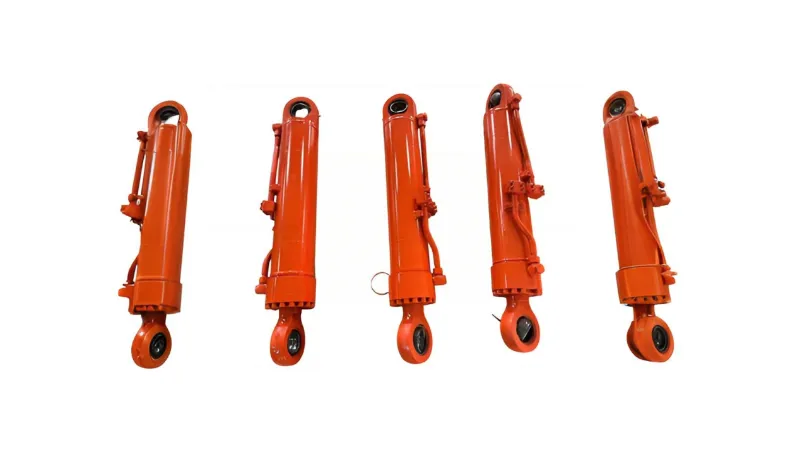
Classification of Hydraulic CylindersHydraulic cylinders come in many types:
(1) According to the mode of action, hydraulic cylinders are divided into two main categories: single-acting and double-acting. In a single-acting hydraulic cylinder, movement in one direction is achieved by hydraulic pressure, while the reverse movement relies on gravity or spring force. In a double-acting hydraulic cylinder, movement in both directions relies on hydraulic pressure.
(2) According to different operating pressures, hydraulic cylinders can be further divided into medium-pressure, low-pressure, medium-high-pressure, and high-pressure hydraulic cylinders. • For machine tools, medium and low pressure hydraulic cylinders are generally used, with a rated pressure of 2.5MPa~6.3MPa; for construction vehicles and aircraft requiring small size, light weight, and high output, medium and high pressure hydraulic cylinders are mostly used, with a rated pressure of 101MPa~16MPa;
For hydraulic presses and similar machinery, most use high pressure hydraulic cylinders, with a rated pressure of 25MPa~315MPa.
(3) According to different structural types, hydraulic cylinders are also classified into piston type, plunger type, swing type, telescopic type, etc. Among them, piston type hydraulic cylinders are the most widely used. Piston type hydraulic cylinders have different structures and movement modes, such as single piston rod and double piston rod, cylinder-fixed type and rod-fixed type.
How does hydraulic cylinder leak?
How does hydraulic oil leak in a hydraulic cylinder? When a hydraulic cylinder is working, the pressure inside the cavity is much higher than the pressure outside the cavity (atmospheric pressure); the pressure in the oil inlet cavity is much higher than the pressure in the oil return cavity. Thus, the oil may leak through the connection of fixed parts (one pathway), such as the connection between the end cap and the cylinder, and the clearance between relatively moving parts (another pathway). As shown in the diagram below. External leakage not only causes oil loss and affects the environment, but also poses a fire hazard. Internal leakage will cause the oil to heat up, reduce the volumetric efficiency of the hydraulic cylinder, and consequently worsen the working performance of the hydraulic cylinder. Therefore, leakage should be minimized.
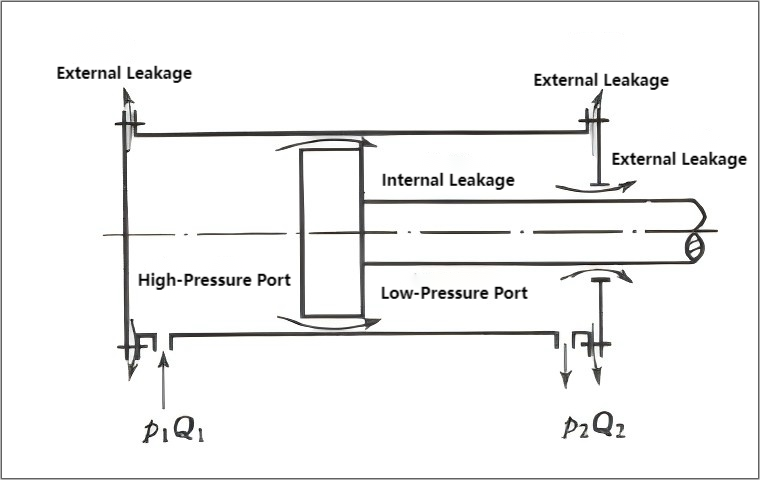
As shown in the diagram, hydraulic cylinders can leak hydraulic oil, most importantly through the connection and clearance. This can be summarized into five main categories:
(1) Issues with the selection of sealing rings: With the development of hydraulic technology, the design and structure of sealing devices have become more diverse, and new sealing materials are constantly emerging. Common types of sealing rings include dust rings, YX-type rings, U-type rings, V-type combination seals, Glyd rings, Step seals, and support guide rings, etc., which are mainly selected by the design and manufacturing units, and generally there are no problems. Due to cost considerations, common sealing materials used on-site are typically nitrile rubber, polyester polyurethane, and woven fabric rubber, which are low-grade materials and often fail to meet the requirements for long-term sealing reliability. Therefore, upgrading sealing materials is crucial for improving sealing performance and extending the service life of hydraulic cylinders.
(2) Sealing ring storage: Hydraulic seals are usually kept in large quantities. On-site personnel must standardize and systematize their maintenance and storage to promptly identify problems and avoid using aged or deteriorated sealing rings.
(3) Sealing installation: Strengthen technical training for on-site personnel. During installation, ensure the hydraulic cylinder and sealing rings are clean to avoid scratches or incorrect installation. Pay attention to the installation techniques for different types of sealing rings.
(4) Sealing ring and groove fit: The quality of sealing performance depends not only on the sealing ring itself, but also on the fit between the sealing ring and the groove, and between the sealing ring and the sealed surface. If there are errors in the groove's machining dimensions or wear on the cylinder body or tie rod, the sealing ring dimensions need to be adjusted according to the actual assembly dimensions. If the sealed surface is scratched or too rough, it needs to be repaired or replaced.
(5) Sealing issues between the oil inlet/outlet and the hydraulic oil pipe: Long-term use of hydraulic oil pipes can lead to aging and insufficient tightness in the fit between the inlet/outlet and the oil pipe, resulting in oil leakage.
Sealing methods for hydraulic cylinders
Common sealing methods for hydraulic cylinders include gap sealing and ring sealing.
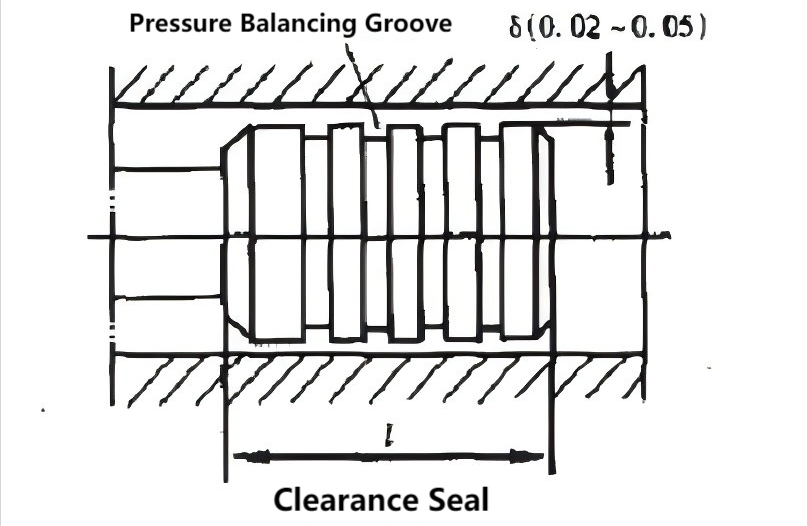
(1) Gap sealing, as shown in Figure 1, relies on a very small clearance between the relatively moving parts to ensure a seal. Several annular grooves (generally 0.5 x 0.5 mm) are made on the piston of the hydraulic cylinder. Their function is twofold: firstly, to reduce the contact area between the piston and the cylinder wall; secondly, due to the oil pressure in the annular grooves, the piston is positioned in the center, reducing friction between the piston and the cylinder wall caused by side pressure, and thus reducing leakage. This sealing method has low friction but poor sealing performance and requires high machining accuracy. It is suitable for applications with small dimensions, low pressure, and high movement speed. The clearance value can be 0.02~0.05 mm.
(2) Sealing rings can be used for both stationary (static) and moving (dynamic) components, and are currently the most widely used sealing devices in hydraulic systems. Sealing rings are made of oil-resistant rubber (in recent years, nylon or other materials have also been used to improve wear resistance). Sealing rings are typically made in O-shape, Y-shape, V-shape, L-shape, J-shape, Yx-shape, etc. They have a series of advantages such as easy manufacturing, convenient use, reliable sealing, and reliable operation under various pressures.
① O-ring seals are a type of sealing element with a circular cross-section and are widely used. O-ring seals are installed in grooves and deformed under oil pressure, causing them to fit tightly against the groove and gap to achieve a sealing effect. The sealing performance increases with increasing pressure. Its advantages are simple structure, easy manufacturing, good sealing performance, and low friction; its disadvantage is that under high pressure...
② Y-ring seals Under normal circumstances, Y-ring seals can be directly installed into the groove without a support ring to achieve a sealing effect. However, in situations with large pressure changes and high sliding speeds, a support ring must be used to fix the seal. Its advantages include strong adaptability.
③ V-shaped seals are mostly used in hydraulic cylinders with low movement speeds. They consist of support rings, sealing rings, and pressure rings of varying shapes. These seals have a large contact area and good sealing performance, but also high friction.
④ Yx seals have a small cross-sectional dimension and simple structure; their length is more than twice their width. Therefore, even without a support ring, the seal will not twist or roll in the groove. The inner and outer lips of the seal have different lengths. The short lip is the working lip, in contact with the sealing surface, resulting in low sliding friction, good wear resistance, and long service life. The long lip has a larger interference fit with the non-moving surface, resulting in high frictional resistance. This gives the Y-shaped seal good stability and compensates for wear. This structure provides good sealing performance in both high and low pressure environments and in high-speed movements. Therefore, Yx-shaped seals are currently widely used. (Y-shaped, V-shaped, Y...) The sealing of O-rings is achieved through the action of pressurized oil, which tightens their lips against the sealing surface. Higher oil pressure results in a better seal. During use, attention should be paid to the installation direction to ensure they open under pressure.
Hydraulic Cylinder Leakage
Is it ideal for a hydraulic cylinder to leak absolutely no hydraulic oil? Many people believe that hydraulic oil leakage in hydraulic cylinders has many drawbacks, so wouldn't it be best to eliminate all leakage? Actually, this isn't the case. If there were no leakage at all, the piston rod's reciprocating motion inside the cylinder wouldn't carry any oil out, resulting in dry friction and negatively impacting the cylinder's performance and lifespan. Furthermore, achieving absolute sealing in a hydraulic cylinder is impossible. The reciprocating motion of the piston rod inevitably carries out some oil. However, this leakage must be minimized. Therefore, hydraulic seals must have extremely low leakage, excellent sealing performance, and automatically improve their sealing effect with increasing hydraulic oil pressure. Even under harsh working environments such as high pressure and high temperature, the leakage of hydraulic seals should not increase significantly.
Summary
The hydraulic cylinder is the actuator of a hydraulic system and an important component of the system. The quality of the hydraulic cylinder's seal directly affects the working performance and efficiency of the entire system. Therefore, we must ensure that the hydraulic cylinder has good sealing performance.