- English
- Español
- Português
- русский
- Français
- 日本語
- Deutsch
- tiếng Việt
- Italiano
- Nederlands
- ภาษาไทย
- Polski
- 한국어
- Svenska
- magyar
- Malay
- বাংলা ভাষার
- Dansk
- Suomi
- हिन्दी
- Pilipino
- Türkçe
- Gaeilge
- العربية
- Indonesia
- Norsk
- تمل
- český
- ελληνικά
- український
- Javanese
- فارسی
- தமிழ்
- తెలుగు
- नेपाली
- Burmese
- български
- ລາວ
- Latine
- Қазақша
- Euskal
- Azərbaycan
- Slovenský jazyk
- Македонски
- Lietuvos
- Eesti Keel
- Română
- Slovenski
- मराठी
- Srpski језик

How Do You Choose a Hydraulic Cylinder That Won’t Leak, Drift, or Fail Early?
Article Abstract
A Hydraulic Cylinder looks simple from the outside, but most “mystery breakdowns” come from a few predictable mistakes: the cylinder is sized for pressure but not for side-load, the seals don’t match the oil temperature and contamination level, the rod finish isn’t suited to corrosion, or the mounting geometry forces the cylinder to fight the machine instead of moving with it.
This guide breaks the problem down into practical decisions you can make before buying, and straightforward checks you can run when a cylinder is already installed. You’ll learn how to size force and speed, pick the right construction type, prevent leaks and drift, reduce downtime, and set up a maintenance routine that actually matches real working conditions.
Table of Contents
- Outline
- The Most Common Customer Pain Points
- Hydraulic Cylinder Basics Without the Fluff
- Selection Checklist That Prevents Regret
- Force, Speed, and Stability Sizing
- Choosing the Right Cylinder Type
- Leakage, Drift, Scoring, and Slow Cycles
- Troubleshooting Table
- Maintenance Plan That Fits Reality
- Working With a Manufacturer
- FAQ
- Next Step
Outline
- Identify the failure you’re trying to avoid (leaks, drift, bent rods, slow response, corrosion).
- Confirm application conditions (load direction, cycle rate, oil type, contamination, temperature, environment).
- Size the cylinder for force and stability (buckling and side-load risk).
- Select construction and sealing that match your reality, not an ideal brochure scenario.
- Define acceptance tests and maintenance intervals before the cylinder ever ships.
The Most Common Customer Pain Points
Let’s be blunt: most cylinder problems are not “bad luck.” They are a mismatch between the cylinder’s design assumptions and how the machine actually behaves.
- Leak anxiety: external leaks make a mess and trigger safety issues; internal leakage steals force and speed.
- Position drift: the cylinder “creeps” under load, ruining accuracy and creating a constant re-adjustment loop.
- Unstable motion: stick-slip, chatter, or inconsistent cycle time kills productivity and confidence.
- Premature seal failure: the seals harden, swell, or shred because oil temperature, additives, or contamination were underestimated.
- Rod damage and corrosion: pitting or scoring turns into seal damage, then leaks, then downtime.
- Wrong fit: mounting dimensions are close but not correct, causing side-load, misalignment, and early wear.
If any of those sound familiar, the fix starts with getting specific about your operating conditions.
Hydraulic Cylinder Basics Without the Fluff
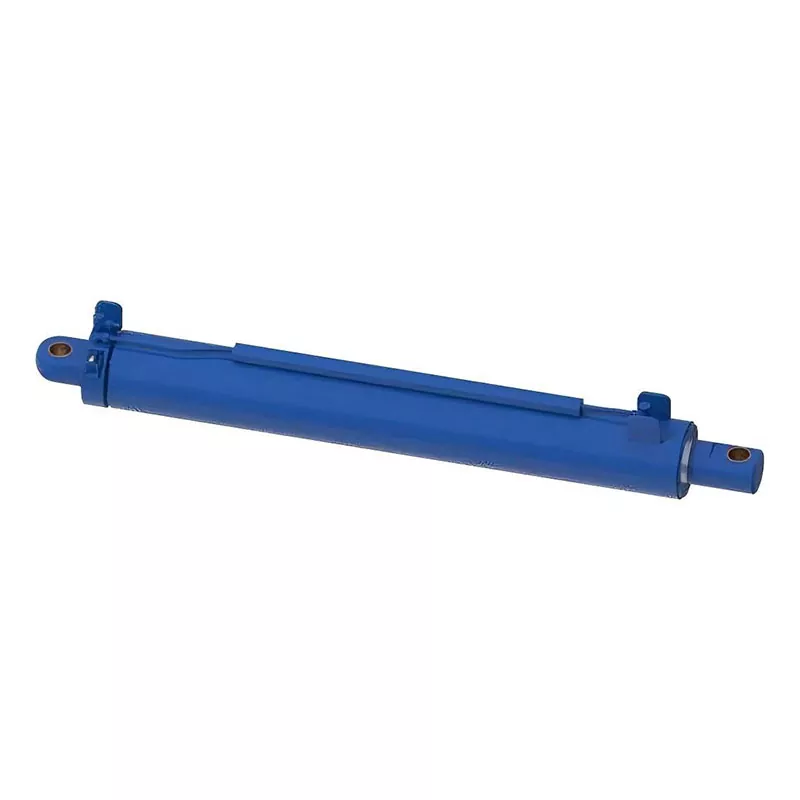
A Hydraulic Cylinder converts hydraulic energy into linear motion through pressure acting on a piston area. That’s the textbook sentence. The useful part is what it implies:
- Force depends on pressure and area: bigger bore = more force at the same pressure.
- Speed depends on flow and area: more flow = faster motion; bigger bore = slower motion at the same flow.
- Stability depends on rod diameter, stroke length, and load direction: long strokes and compressive loads raise buckling risk.
- Life depends on sealing, surface finish, alignment, and contamination control: most wear is preventable.
Key takeaway: you can’t choose a cylinder by bore and stroke alone. You choose a system component that must match pressure, flow, load path, environment, and maintenance reality.
Selection Checklist That Prevents Regret
Before you request a quote or approve a drawing, collect these details. If a supplier doesn’t ask for them, that’s not “efficient,” that’s a warning sign.
- Load case: maximum load, typical load, and whether the load is tensile, compressive, or alternating.
- Stroke and retracted length: including installation constraints and end-of-stroke clearance.
- Mounting style: pin-to-pin, flange, trunnion, clevis, foot mount, or custom geometry.
- Side-load risk: any off-axis force, misalignment, or bending moment during travel.
- Working pressure: normal and peak (spikes matter).
- Required speed: extension and retraction speed targets, plus cycle frequency.
- Oil type and temperature range: cold starts and hot continuous operation need different sealing choices.
- Environment: dust, mud, salt spray, washdown chemicals, outdoor UV, or abrasive particles.
- Position holding needs: do you require minimal drift under static load?
- Service expectations: planned maintenance intervals and whether field seal replacement is required.
Practical shortcut: if the cylinder must survive harsh conditions, budget for better rod protection and smarter sealing now, or budget for downtime later.
Force, Speed, and Stability Sizing
Force: A cylinder that “almost” meets the load requirement will feel weak during real-world spikes (impact loads, friction, pressure drops, temperature changes). You want a margin that fits your risk tolerance, not a razor-thin calculation.
Speed: If you only size for force, you may accidentally slow your machine down. Speed is driven by available pump flow and the cylinder’s effective area. This is why two cylinders with the same stroke can have wildly different cycle times.
Stability: Long-stroke cylinders under compressive load can buckle like a slender column. A bigger rod (or a different mounting arrangement) can be the difference between “years of smooth operation” and “why is my rod slightly banana-shaped.”
- If you see rod bending: it’s often misalignment or side-load, not just “too small.”
- If you see slow extension only: check flow limits, valve sizing, or excessive backpressure.
- If you see drift: suspect internal leakage, load-holding valves, or thermal expansion effects.
Choosing the Right Cylinder Type
There are many cylinder styles, but most industrial decisions boil down to durability, serviceability, and how harsh the application is.
- Tie-rod cylinders: common in industrial equipment; easier to service; good for controlled environments.
- Welded cylinders: compact and rugged; often preferred in mobile and heavy-duty machinery.
- Telescopic cylinders: long stroke in a short retracted length; great for dumping and lifting where space is limited.
- Double-acting vs. single-acting: double-acting gives control in both directions; single-acting relies on external force (gravity/spring) to return.
Matching rule: the rougher the environment and the higher the shock loads, the more you should favor robust construction, strong rod protection, and sealing designed for contamination.
Leakage, Drift, Scoring, and Slow Cycles
External leaks usually come from worn rod seals, damaged wipers, poor rod surface condition, or installation misalignment that “chews” seals. Fixing the leak without fixing the cause is how you end up replacing seals again and again.
Internal leakage (piston seal bypass) is sneaky: the cylinder moves, but it can’t hold or build force. You’ll notice drift under load, weak lift, or a need to constantly “top up” pressure. Internal leakage can also raise oil temperature because energy is being wasted as heat.
Rod scoring is often caused by contamination (abrasive particles), inadequate wiping, or corrosion pits. Once scoring begins, seal life drops quickly. This is why rod finish quality and contamination control matter even more than people expect.
Slow cycles can be a cylinder issue, but many times it’s system-related: flow restrictions, valve sizing, clogged filters, or excessive backpressure. A good troubleshooting process separates “cylinder mechanics” from “hydraulic circuit behavior.”
Troubleshooting Table
| Symptom | Likely Root Cause | Fast Checks | Practical Fix |
|---|---|---|---|
| Oil visible on rod or around gland | Rod seal wear, damaged wiper, rod pitting, misalignment | Inspect rod surface; check wiper condition; verify mounting alignment | Replace wiper/seals; improve rod protection; correct alignment and side-load |
| Cylinder drifts under static load | Internal leakage, valve leakage, load-holding issue | Isolate cylinder; pressure decay test; check counterbalance/load-hold valves | Upgrade sealing; repair piston seals; add/adjust load-holding valves |
| Jerky motion or stick-slip | Air in system, contaminated oil, friction mismatch, valve instability | Bleed air; sample oil; check filtration and valve settings | Improve bleeding procedure; filtration; tune valves; verify seal/material match |
| Rod scoring | Abrasive contamination, failed wiper, corrosion exposure | Look for debris at wiper; check environment; inspect rod coating condition | Upgrade wiper; improve contamination control; use better rod surface protection |
| Slow extend/retract | Flow restriction, pressure drop, clogged filter, backpressure | Measure flow/pressure; check filter indicators; inspect hoses/valves | Remove restrictions; resize valves/lines; replace filters; reduce backpressure |
| End-of-stroke impact or harsh stop | Insufficient cushioning, overspeed, load inertia | Check cushioning design; verify speed; examine load inertia | Add/adjust cushioning; control speed; revise circuit for smoother deceleration |
Maintenance Plan That Fits Reality
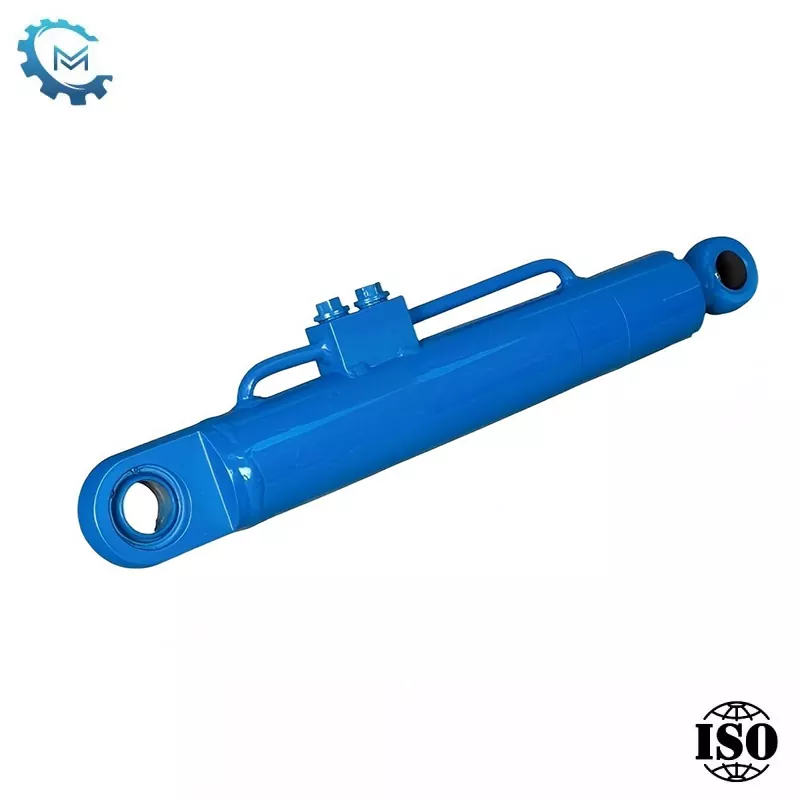
The best maintenance plan is the one your team will actually follow. Here’s a simple, field-friendly routine that protects your Hydraulic Cylinder investment.
- Daily or shift checks: look for new oil film on rods, unusual noise, and changes in cycle speed.
- Weekly cleaning: wipe rods before retraction in dirty environments; inspect wiper lips for tearing.
- Monthly inspection: check mounting pins, bushings, and any play that could create side-load.
- Oil health discipline: keep filters on schedule; treat contamination as a “wear multiplier.”
- Temperature awareness: overheating hardens seals and accelerates leakage; investigate recurring high temps.
- Planned rebuild triggers: don’t wait for catastrophic failure—define acceptable leakage and drift limits.
Small habit, huge payoff: keep rod surfaces protected during storage and transport. Many “brand-new” leak cases start with rod damage before installation.
Working With a Manufacturer
When downtime is expensive, “buying a cylinder” is not the goal—getting reliable motion over time is. That’s why a good manufacturer should support more than just dimensions.
At Qingdao Micro Precision Machinery Co., Ltd., many customers come in with a common story: the cylinder they used “on paper” met the bore and stroke, but failed early because the application was harsher than expected. The practical fix is usually a combination of better alignment support, upgraded sealing and wipers, rod surface protection, and acceptance testing that matches real operating pressure and duty cycle.
- Drawing confirmation that prevents misfit: mounting geometry, pin sizes, and tolerance stack-ups.
- Material and surface decisions that prevent corrosion and scoring: rod protection options tailored to environment.
- Testing that builds confidence: pressure holding, leakage checks, and functional smoothness verification.
- Service thinking: parts availability and rebuild-friendly design where field maintenance is required.
Bottom line: the “right” Hydraulic Cylinder is the one designed around your load path, your contamination level, and your uptime expectations—not just a spec sheet.
FAQ
Q: Why does a Hydraulic Cylinder drift even when there are no external leaks?
A: Drift is often caused by internal leakage across piston seals, valve leakage, or thermal effects that change pressure balance. A controlled isolation test can help separate cylinder bypass from circuit issues.
Q: What is the fastest way to reduce seal failures?
A: Focus on contamination control and rod protection. A good wiper, clean oil, and a rod surface that resists pitting do more for seal life than repeatedly swapping seal kits.
Q: Is a bigger bore always better?
A: Bigger bore increases force, but it can reduce speed (at the same pump flow), increase cost, and change system dynamics. Proper sizing balances force, speed, stability, and efficiency.
Q: How do I know if side-load is hurting my cylinder?
A: Common clues include uneven seal wear, rod scoring on one side, bushing damage, and recurring leaks shortly after rebuilds. Misalignment and bending moments are typical culprits.
Q: What causes jerky motion?
A: Air in the system, contamination, inconsistent lubrication at seals, and unstable valve behavior are frequent causes. Bleeding procedures and oil cleanliness checks usually reveal the problem.
Q: Can I standardize cylinders across different machines to simplify inventory?
A: Sometimes, yes—but only if the load cases and mounting geometry are truly compatible. Standardizing the wrong cylinder can quietly raise downtime costs.
Next Step
If you’re selecting a new Hydraulic Cylinder or troubleshooting leaks, drift, or unstable motion, the most efficient move is to match the cylinder design to your real operating conditions: load direction, duty cycle, oil temperature, contamination level, and mounting alignment.
Want a faster, cleaner decision with fewer surprises? Share your application basics (load, stroke, mounting, pressure, environment), and Qingdao Micro Precision Machinery Co., Ltd. can help you narrow the safest options and define practical acceptance tests before production. When you’re ready, contact us to get a quote and a technical recommendation that prioritizes uptime.